How iMotivat Moved Thousands of People Towards Digital Sovereignty Without Losing Them Along the Way
Most organisations invest heavily in technology. New systems are introduced and transformation programmes launched, yet many still fail to deliver the results they were meant to achieve.
After spending decades leading complex programmes for governments, European institutions, international organisations and private organisations, Dr. Beatrice Lukose, CEO of iMotivat, kept seeing the same pattern. Technology was rarely the problem.
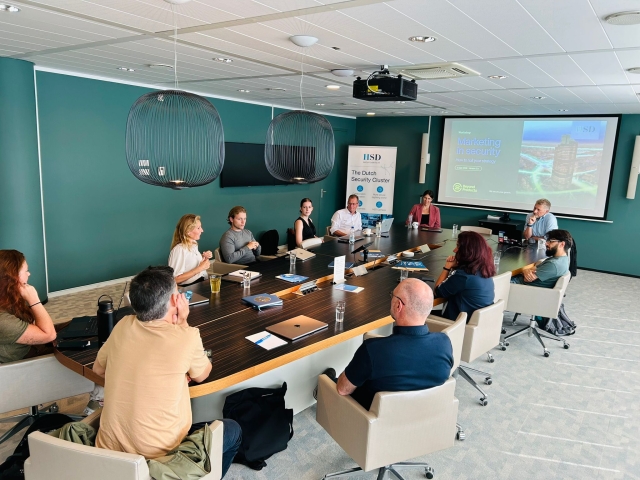
At HSD Campus in The Hague, Dr. Beatrice Lukose and her team help organisations deliver end-to-end transformation programmes focused on AI and digital sovereignty, bringing together technology, governance, leadership and people.
We spoke with Dr. Beatrice Lukose and Marcel Winkel about digital sovereignty, programme management and why successful transformation always starts with people.
Learning from experience
Long before iMotivat was established in the Netherlands, its founders had spent decades leading transformation programmes for governments, international organisations, defence organisations and private companies.
Across those projects, one lesson kept returning: technology alone was never enough.
"The real challenge is bringing together strategy, governance, leadership and people."
The company's name reflects that philosophy. The "i" stands for innovation, information, intelligence and technology, while "Motivat" reflects the belief that people are at the centre of successful transformation.
Today, iMotivat works across programme and project management, digital sovereignty, governance and AI-enabled business solutions, including cloud architecture, cybersecurity and governance, risk and compliance. Since establishing itself in the Netherlands, the company has delivered more than 52 projects with a combined implementation value of around €50 million.
Turning digital sovereignty into reality
Digital sovereignty has become an increasingly important topic across Europe. More organisations are asking where their data is stored, which technologies they rely on and how they can strengthen control over their digital environment.
iMotivat brings together practical digital sovereignty experience across three connected areas: supporting the transition of approximately 2,500 staff in an international organisation, transitioning its own operations and developing its own Digital Sovereignty product. Each area strengthens the others, connecting programme delivery, firsthand experience and product development.
1. Supporting the transition of 2,500 staff in an international organisation
One of iMotivat’s most recent projects involves supporting an international organisation in transitioning approximately 2,500 users to a European digital sovereignty platform. The programme brings together governance, assessments, suppliers and technology partners, with particular attention to the people using the systems every day.
2. Transitioning iMotivat’s own digital sovereign environment
Alongside its client work, iMotivat is transitioning its own operations towards a more digitally sovereign environment. Applying these principles internally gives the team firsthand experience of the decisions, challenges and practical implications that organisations face throughout their transition.
3. Developing a Digital Sovereignty Product
iMotivat is translating lessons from both its international programme work and its internal transition into its own Digital Sovereignty product. The product is being designed to help organisations assess their current position, transition towards greater digital sovereignty and govern their digital environment over time.
Across all three areas, one lesson stands out for Dr. Lukose: “People are key.”
Before introducing new technology, the team spent time listening to employees, understanding their concerns and preparing them for change. Building confidence and helping people understand the journey proved just as valuable as the technology itself.
Bringing people along the journey
According to Marcel Winkel, that human side is often overlooked. People become attached to the tools they use every day, so replacing them is never simply a technical decision.
"People do not like change. But once they understand why the change is necessary, they are much more willing to embrace it."
That is why iMotivat involves people from the start, helping them understand why decisions are being made and what those choices mean for their daily work.
Digital sovereignty is not an all-or-nothing decision, and there is no single roadmap.
Instead, Marcel believes organisations should ask: Where are we today? Where do we want to be? And what is the most realistic way to get there?
Starting before it becomes urgent
One of the biggest lessons from recent projects is not to wait until change is forced.
Dr. Lukose's advice is simple: "Start slowly." Begin with an assessment, develop a strategy and introduce change step by step.
Starting early gives people time to learn, adapt and become part of the process before change becomes unavoidable.
Why HSD Campus?
For iMotivat, joining HSD Campus was a natural choice. Security runs through its work, and as organisations become more dependent on digital technologies, it needs to be considered throughout transformation programmes rather than treated as a separate function.
The campus brings together organisations working on cybersecurity, digital resilience and emerging technologies, while iMotivat contributes expertise in programme management, governance and organisational change.
Located in The Hague, with its international network and focus on peace, justice and security, HSD Campus offers a fitting environment for organisations working on Europe's digital future.
Looking ahead
Although iMotivat has only been established in the Netherlands for a few years, the experience behind the company stretches back decades. Its ambition is to become one of Europe's trusted partners for programme management, digital sovereignty and governance.
Technology and regulation will continue to change, but for Dr. Beatrice Lukose one thing will not: successful transformation starts with people.